Financial Services
Microsegmentation for Financial Services
Contain lateral movement across branches, corporate networks and workloads that support critical banking services. Build access policy from identity and context, simulate changes against observed traffic, and enforce reviewed policies through supported infrastructure.
Protect the connections banking depends on
Financial institutions need to connect branch services, corporate systems and acquired environments while limiting what a compromised asset can reach. Employee endpoints, application and cloud workloads, building-management and HVAC systems, physical-access and badge readers, and other IoT and OT assets all create communication paths to review. Start with the access each business service needs, then restrict unnecessary communication.

Contain compromise. Keep required access.
Fragmented asset context
Branch devices, workstations and cloud workloads can appear in separate inventories, making it hard to determine which connections support a banking service.
See assets in context
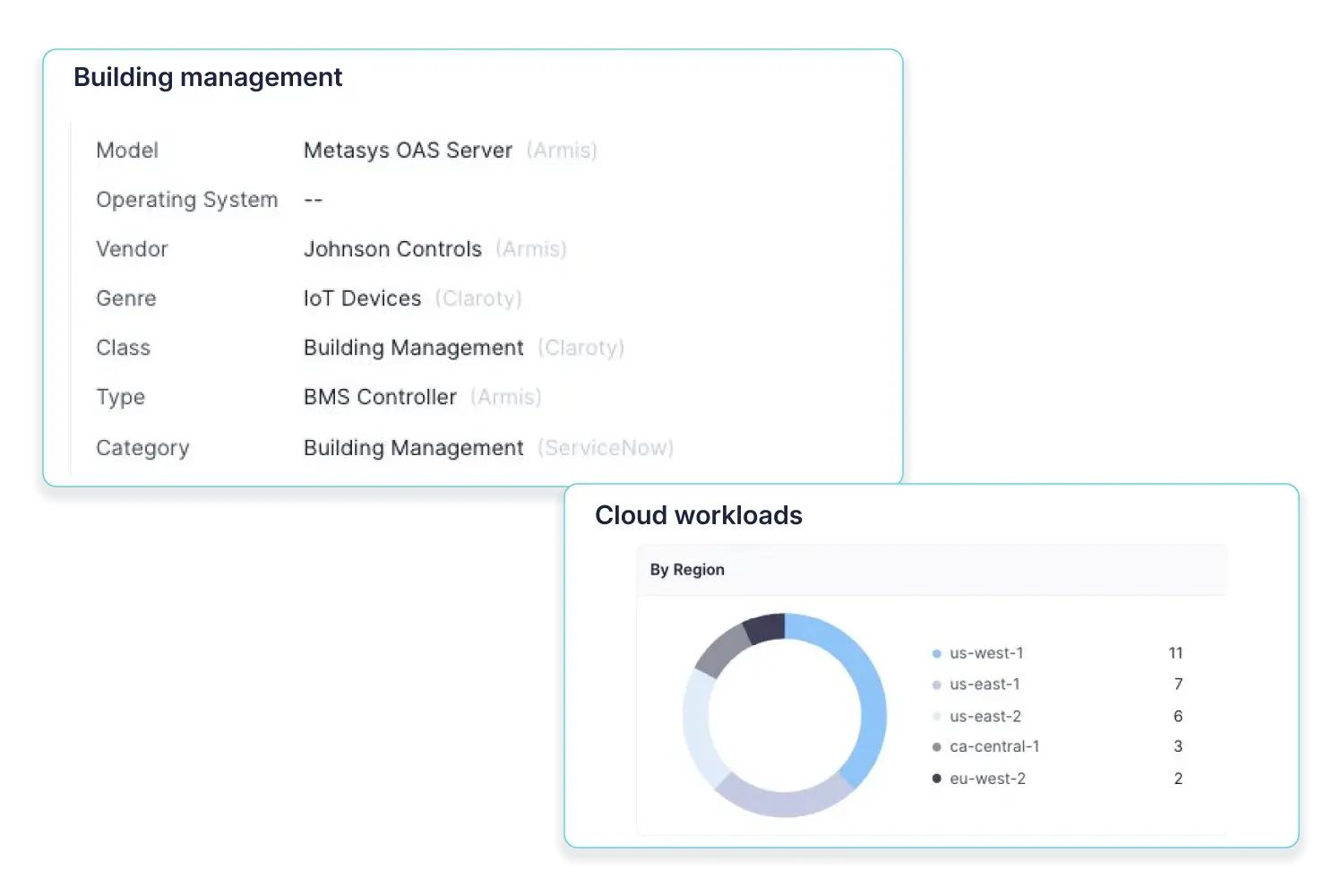
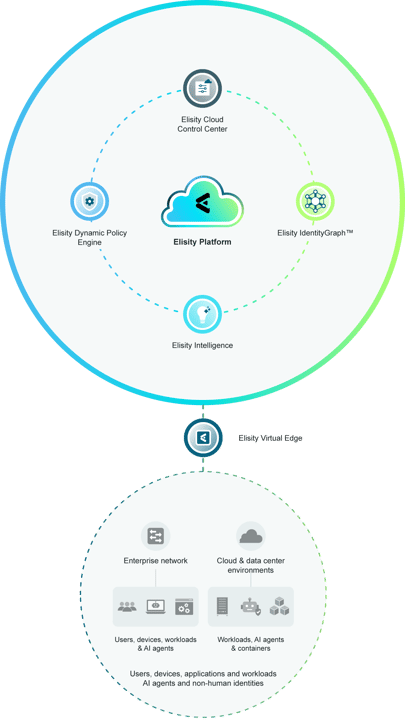
Elisity IdentityGraph correlates network observations with identity, endpoint, CMDB, IoT and cloud context. AWS and Azure connectors bring workload inventory, cloud tags and instance details into the same policy context. Use branch, business-unit and ownership attributes to organize discovered assets.
Paths into critical services
A compromised workstation, branch IoT device or inherited system can become a path to business-critical services when broad access stays in place.
Limit lateral movement
Define the communication each asset group needs and restrict unnecessary paths. Enforce identity-based policies through supported network infrastructure without installing an Elisity agent on protected endpoints. Check hardware and software compatibility when scoping branches and data centers.
Changes need operational review
Branch and security teams need to understand how a policy change could affect banking services before it is activated.
Simulate before enforcement
Assess proposed policy against observed traffic. Elisity Intelligence can identify unused Allow rules and propose policies for administrator review. Suggested policies start in simulation; your team reviews the effects and decides what moves to enforcement. Roll out approved changes in phases.
New workloads and inherited environments
Acquisitions, cloud workloads and AI tools add connections that static network boundaries may not reflect. Teams need to enable required services while reviewing the rest.
Apply policy to the host running the agent
Apply network access policy to devices and workloads that run AI agents, including local computers. Enforcement takes place through supported infrastructure, outside the agent’s runtime. Use identity and business context to separate systems under review. Additional service-account and machine-credential identity support is in development.
Contain a compromise before it spreads
“We can’t assume we’ll patch every vulnerability before an attacker finds it. When attackers move at machine speed, we need to limit their access to critical systems. Our priority is to contain a compromise before it spreads and keep banking services running.”
CISO, U.S. financial services institution
Resources
Plan segmentation around your financial environment
Explore branch containment, acquired environments, access to cardholder-data systems and AI workload isolation. Use identity and observed traffic to review policy, then retain segmentation evidence for your security and compliance teams.
Financial services microsegmentation FAQ
Answers to common questions about applying identity-based policy across a financial institution.
Elisity limits the network paths a compromised device can use. Teams define required communication for branch devices and critical services, simulate proposed policy against observed traffic, and enforce reviewed restrictions through supported network infrastructure. Microsegmentation supports containment; it does not replace patching, detection or incident response.
No. Elisity can provide segmentation and policy evidence for a compliance review. Your team determines scope, validates controls and performs any required testing. Deploying a product does not establish compliance by itself.
AWS and Azure connectors bring workload context into IdentityGraph. Elisity applies network access policy to the device or workload running an AI agent, including local computers, through supported infrastructure outside the agent’s runtime. Additional service-account and machine-credential identity support is in development.
Use simulation to assess proposed policies against observed traffic. Administrators review the results, refine access and decide what moves to enforcement. Stage changes with the teams responsible for banking services; simulation does not guarantee that a change cannot affect operations.
Use identity, business context and observed communication to group assets and restrict unnecessary access. Connect the services the business requires while systems remain under review, then refine policy as the environment becomes better understood.