



SentinelOne logo

SentinelOne + Elisity: AI-Powered Endpoint Intelligence for Dynamic Microsegmentation

SentinelOne Singularity detects, quarantines, and reports on every endpoint it protects. Elisity carries that posture, agent version, firewall status, disk encryption, infection status, and console connectivity, into the Elisity IdentityGraph™ and enforces identity-based microsegmentation through the network infrastructure you already own. Together you contain lateral movement on managed endpoints and extend least-privilege policy to the IoT, OT, and IoMT devices no EDR agent can reach.

EDR / Risk Status
Device Intelligence
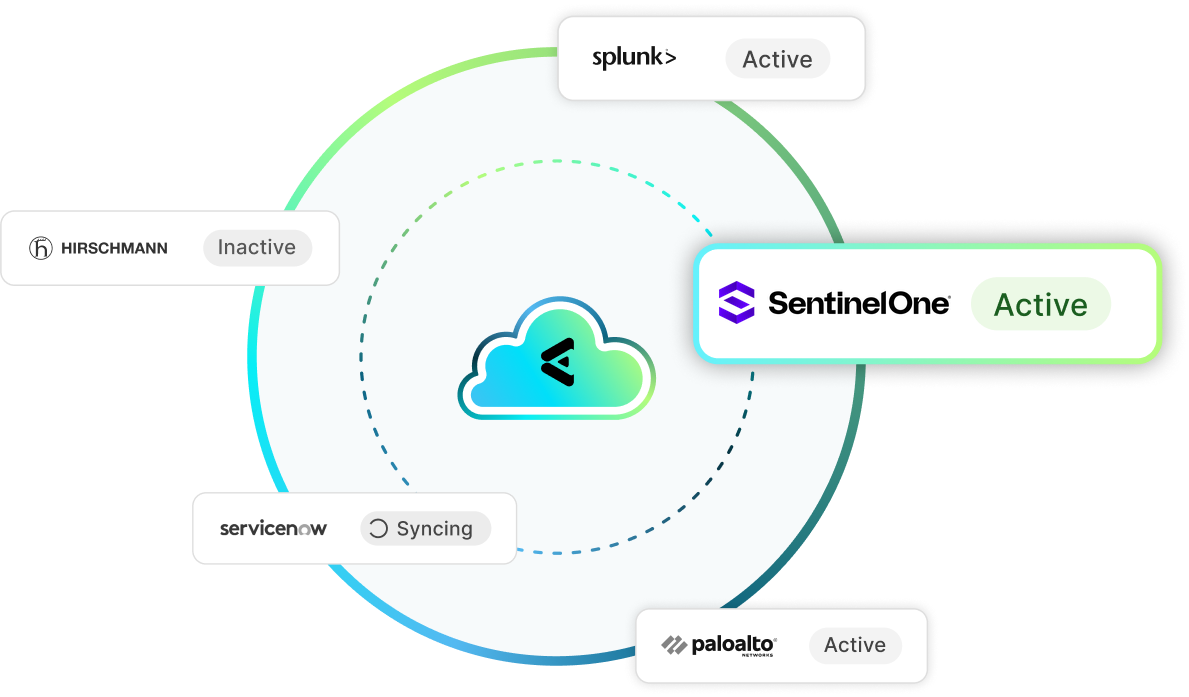
SentinelOne and Elisity integration showing SentinelOne endpoint intelligence active in the Elisity Cloud Control Center
 

Support Documentation

Read the complete integration details and resources.
 

Challenge


Stopping Lateral Movement After an Endpoint Is Compromised

A phishing payload lands on a clinical workstation at 2:14 a.m. SentinelOne quarantines the process in seconds. In the minutes before that verdict, though, the workstation had an open path to the imaging archive, the badge system, three file shares, and every other host on its VLAN. Detection stopped the malware on that machine. It did not close the doors around it. That is the shape of most ransomware incidents: the initial foothold is contained quickly, and the real damage comes from what the compromised host was permitted to reach on a flat network. Traditional segmentation cannot help, because VLANs and access control lists are static. They were written months ago from an IP plan, they know nothing about a host’s current infection status or agent health, and changing them means a change ticket, a maintenance window, and a network engineer. East-west propagation across IT, OT, and IoMT does not wait for any of that. See why EDR alone leaves that gap open.

Elisity Solution


SentinelOne Threat Signals Drive Elisity Policy in Real Time

When SentinelOne flags an endpoint as infected, Elisity revokes that device’s network access without a network change ticket. The integration reads the SentinelOne Singularity Platform through its management API and writes each agent’s current state into Elisity IdentityGraph as device attributes: infection status, agent version, firewall enabled or disabled, disk encryption state, and console connectivity. Those attributes are first-class policy conditions, so one policy group can be defined as “Windows clinical workstations, SentinelOne agent healthy, not infected” and a quarantine group can be defined as its inverse. When the status changes in SentinelOne, IdentityGraph updates the device’s classification and the Elisity Cloud Control Center pushes the matching policy to the enforcement points that device is connected to. Containment becomes a property of the network the compromised host is sitting on, not a manual response step that begins when an analyst opens a ticket.

Challenge


Writing Network Access Policy Without Endpoint Security Context

Ask a network team to write a least-privilege policy and the first question back is: privilege for what? A subnet is not a security posture. An IP address does not tell you whether a host is running a current SentinelOne agent, whether its local firewall is on, whether the disk is encrypted, or whether the console lost contact with it six weeks ago. Without those facts, teams default to one of two bad options. They write permissive rules that let anything in the user VLAN reach anything in the server VLAN, which is how one compromised laptop becomes a domain-wide incident. Or they write restrictive rules from stale inventory data, break a clinical or production workflow, and spend the next quarter granting exceptions until the policy is permissive again. Meanwhile the frameworks they are audited against, HIPAA Security Rule safeguards, PCI DSS segmentation testing, and NIST SP 800-207 zero trust guidance, all assume the organization can prove which devices are allowed to talk to which.

Elisity Solution


Endpoint Posture Attributes Become Identity-Based Access Policy

Elisity turns SentinelOne endpoint posture into policy conditions you can enforce. The attributes the integration ingests, agent version, firewall status, disk encryption status, infection status, and console connectivity, join the identity signals already in IdentityGraph: Active Directory user and group, device classification, MAC and IP, location, and asset data from your CMDB or device intelligence platform. Policy is written against that combined identity, never against an address. A rule can grant a workstation access to the electronic health record only while its SentinelOne agent is at an approved version and reporting to the console, and can hold any endpoint with disk encryption disabled to remediation services until it is fixed. Because conditions are evaluated against live attributes, a device that drifts out of compliance loses the access that depended on that attribute and regains it once SentinelOne reports it healthy. Nobody edits an access control list to make that happen. This is what identity-based microsegmentation is for.

Challenge


Siloed Endpoint and Network Tools Slow Incident Response

During an incident, the endpoint console and the network team work from different screens. SentinelOne shows the process tree, the hash, and the machines that executed it. The network side shows flows, VLANs, and access control lists. Nobody holds one view of both, so the first hour goes to correlation: exporting host lists, matching them to network ports and addresses, deciding what to isolate, and arguing about what will break. Every one of those steps is manual, and mean time to respond absorbs all of it. The gap widens at the edge of the agent estate. EDR only sees what it can be installed on, and a hospital or plant runs thousands of devices that will never accept an agent: infusion pumps, patient monitors, imaging modalities, building controllers, cameras, programmable logic controllers, and embedded systems under vendor support contracts that forbid third-party software. Those devices share the network with the endpoints you are protecting, and the endpoint console cannot see them at all.

Elisity Solution


One Policy Plane for Agent-Protected and Agentless Devices

Elisity extends the protection SentinelOne gives your managed endpoints to every device that cannot run an agent, and governs both from one place. SentinelOne posture flows into IdentityGraph alongside discovery data from your other connected sources, so the Elisity Cloud Control Center presents one device record holding security state and network behavior together: what the device is, who is using it, what its agent reports, and what it is actually reaching. Analysts stop exporting spreadsheets to match host names against network ports and IP addresses. The same policy engine that isolates an infected laptop also constrains the infusion pump, the imaging modality, the badge controller, and the programmable logic controller two racks away, because enforcement happens in the network infrastructure you already own rather than on the device. Coverage stops depending on whether an agent can be installed, and the devices EDR was never designed to reach stop being the quiet part of the attack path.

Explore Our Integrations

Elisity integrates with leading IT, OT, and IoT asset intelligence platforms. Combine deep device discovery and classification with identity-based microsegmentation enforced through your existing network infrastructure.

Device Intelligence / Risk Status

EDR / Risk Status

CMDB

Network Enforcement Point

User Identity / Device Metadata

SIEM

SentinelOne + Elisity Integration FAQ

Get answers to common questions about how SentinelOne Singularity integrates with Elisity to contain lateral movement, turn endpoint posture into access policy, and protect the IoT, OT, and IoMT devices EDR agents cannot reach.

How does the SentinelOne and Elisity integration work?

SentinelOne Singularity protects and continuously monitors your managed endpoints. You connect it to Elisity by entering SentinelOne API credentials in the Elisity Cloud Control Center, which takes minutes. Elisity then pulls endpoint posture attributes, including agent version, firewall status, disk encryption status, infection status, and console connectivity, into the Elisity IdentityGraph, where they become conditions inside identity-based microsegmentation policy. Elisity enforces that policy through the network infrastructure you already own, so a compromised or non-compliant endpoint loses the access its posture no longer justifies, with no network change ticket, no new hardware, and no agent on the enforcement path.

Do I need SentinelOne agents on every device for Elisity microsegmentation?

No. Elisity enforcement is agentless and does not depend on SentinelOne coverage. Where a SentinelOne agent is installed, its posture data makes Elisity policy sharper. Where no agent can be installed, and that includes infusion pumps, patient monitors, imaging systems, building controllers, cameras, and programmable logic controllers, Elisity still discovers, classifies, and segments the device using identity attributes drawn from the network and from your other connected data sources. Enforcement happens in the network infrastructure you already own, so segmentation coverage never depends on whether a device can accept third-party software.

What SentinelOne data does Elisity use in microsegmentation policy?

Elisity ingests endpoint security posture and health attributes from the SentinelOne Singularity Platform: agent version, firewall status, disk encryption status, infection status, and console connectivity. Those attributes are stored in the Elisity IdentityGraph next to the device’s other identity signals, such as Active Directory user and group, device classification, location, and asset data from your CMDB. Policy conditions reference the attributes directly, so you can require a current, healthy, uninfected SentinelOne agent before a device reaches sensitive applications. Elisity reads this data through the SentinelOne management API and applies it to network policy; it does not modify endpoint configuration.

How does the integration contain lateral movement after a compromise?

When SentinelOne marks an endpoint as infected, that status updates the device record in the Elisity IdentityGraph and the device’s policy classification changes with it. Policies bound to that classification take effect at the enforcement points the device is connected to, restricting east-west and north-south communication to whatever the quarantine policy permits, often only remediation and management services. Because the policy already exists and is evaluated against live attributes, containment does not wait for an analyst to open a change ticket or for a network engineer to edit an access control list. The blast radius narrows the moment the status changes.

How long does it take to deploy SentinelOne with Elisity microsegmentation?

The API connection takes minutes: you enter SentinelOne API credentials in the Elisity Cloud Control Center and endpoint posture begins enriching the IdentityGraph immediately. From there, most organizations move from connection to enforced microsegmentation policy in weeks, not the months or years a VLAN redesign or firewall build-out typically requires. Elisity runs policy in observation mode first, showing exactly what each rule would permit or block before anything is enforced. Enforcement then happens through the network infrastructure you already own, so there is no new hardware, no endpoint downtime, and no re-addressing.

Back to top

Resources

Beyond EDR: Why Modern Organizations Need Zero Trust Microsegmentation
Blog Thumbnail - Beyond EDR: Why Modern Organizations Need Zero Trust Microsegmentation

Beyond EDR: Why Modern Organizations Need Zero Trust Microsegmentation

Mar 17, 2025, 11:01:40 AM 10 min read
Modern vs. Legacy Microsegmentation: The Evolution of a Critical Zero Trust Requirement

elisity-man-interacting-with-HMI-OT-manufacturing

Modern vs. Legacy Microsegmentation: The Evolution of a Critical Zero Trust Requirement

Apr 10, 2025, 10:14:40 AM 12 min read
Extending CrowdStrike's Power: How Microsegmentation Secures the Devices EDR Can't Protect

Extending CrowdStrike's Power: How Microsegmentation Secures the Devices EDR Can't Protect

Jul 9, 2025, 5:24:55 PM 6 min read