


Armis + Elisity Integration: Asset Intelligence Meets Identity-Based Microsegmentation
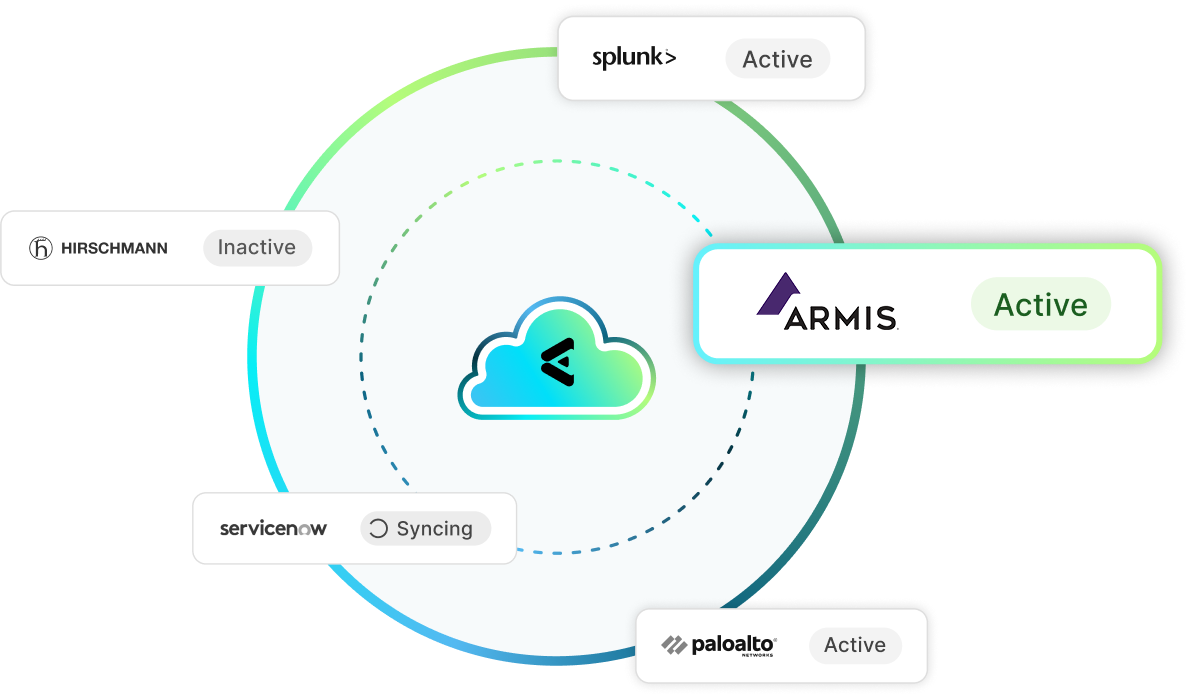
Armis discovers and profiles every device on your network. Elisity enforces identity-based microsegmentation through your existing network infrastructure. The bidirectional integration connects the two in a closed loop: Armis sends device intelligence and risk scores to Elisity IdentityGraph™, and Elisity returns enforcement status back to Armis. No agents on any device. No new hardware.
Support Documentation
Learn more about the integration details.
Connect Armis
Step-by-step guide to connecting Armis with Elisity IdentityGraph for IoT/OT/IoMT microsegmentation.
Armis Classification Details
View Armis device classification attributes, data fields, and enrichment details.
Challenge
Comprehensive Armis Asset Discovery Across IT, OT, and IoMT
Your CMDB says you have 5,000 endpoints. Armis finds 15,000. The gap is IoT sensors, OT controllers, medical devices, building management systems, and contractor laptops that never went through onboarding. You can’t write a security policy for a device you don’t know exists, and you can’t assess risk on a device you can’t identify. That’s the visibility problem most security teams are solving with spreadsheets and hope.
Elisity Solution
Bidirectional Data Exchange for Zero Trust Enforcement
Armis discovers and profiles every connected device on your network, including the ones your existing tools miss. It passes device type, manufacturer, model, OS, firmware version, and real-time risk scores directly into Elisity IdentityGraph™ through an API connection you can set up in minutes. Once that data lands in the IdentityGraph, your security team can see every device, grouped by identity and risk, not just by IP address or VLAN. The blind spots close because the data source covers what traditional tools don’t.
Challenge
Protecting Devices That Cannot Run Agents with Agentless Microsegmentation
An infusion pump running a decade-old OS can’t accept an endpoint agent. Neither can a PLC on your manufacturing floor, a badge reader in your lobby, or a SCADA controller managing your building HVAC. These devices make up a growing share of your network, and not one of them will ever run security software. If your segmentation strategy depends on agents, it doesn’t cover the devices that need protection most.
Elisity Solution
Risk-Based Policy Automation for Unmanaged Devices
Elisity enforces microsegmentation policies through your existing network infrastructure. No agents on any device, ever. When Armis detects a risk score spike on a device (a new vulnerability, anomalous behavior, a firmware mismatch), Elisity can automatically tighten that device’s access policy or quarantine it entirely. Enforcement happens at the network access layer, on the network devices you already own, so it works on every device Armis can see, including the ones that can’t run security software. Elisity sends enforcement status back to Armis, so your security team can verify segmentation coverage without leaving the Armis console.
Challenge
Automating Classification with Armis Device Intelligence
If you’ve scoped a VLAN-based segmentation project, you already know the timeline: months of planning, new firewall rules, VLAN redesigns, change windows, and the constant risk of breaking production traffic. Most organizations that invest in Armis asset intelligence still wait months before that data translates into enforceable segmentation policy. Meanwhile, IEC 62443 zone and conduit requirements don’t wait for your deployment timeline.
Elisity Solution
Deploy Microsegmentation in Weeks with Armis Device Data
Connect Armis to Elisity by entering your API credentials in the Elisity Cloud Control Center. The integration starts pulling device data immediately. From there, Armis device attributes (type, manufacturer, risk score, OS, firmware) feed directly into Elisity policy groups, so you’re building segmentation policies from verified device identity on day one, not from IP ranges on a spreadsheet. You deploy over the network infrastructure you already own. No new hardware, no VLAN redesign, no downtime. Organizations running both Armis and Elisity have gone from API setup to enforced microsegmentation policies in weeks, not the months or years that VLAN-based projects require.
Webinar On Demand
Customer Spotlight: Main Line Health Protects IoT and IoMT Devices Across 5 Hospitals and 40+ Clinical Facilities
Explore Our Integrations
Elisity integrates with leading IT, OT, and IoT asset intelligence platforms. Combine deep device discovery and classification with identity-based microsegmentation enforced through your existing network infrastructure.
Device Intelligence / Risk Status
EDR / Risk Status
CMDB
Network Enforcement Point
User Identity / Device Metadata
SIEM
Armis + Elisity Integration FAQ
Get answers to the most common questions about the Armis and Elisity integration for IoT, OT, and IoMT microsegmentation. Learn how bidirectional asset intelligence enables rapid Zero Trust enforcement across your existing network infrastructure.
The Armis and Elisity integration is a bidirectional API exchange between Armis asset intelligence and the Elisity IdentityGraph™. Armis passively discovers and profiles every connected device across IT, OT, and IoMT environments, passing device type, manufacturer, model, operating system, firmware version, and real-time risk score into IdentityGraph. Elisity uses those attributes to build identity-based microsegmentation policy groups and enforces least-privilege access through the network infrastructure you already own. Elisity then returns policy and enforcement status to Armis, closing the loop. You connect the two by entering Armis API credentials in the Elisity Cloud Control Center, which takes minutes, and no agent is installed on any device.
Yes. The Armis and Elisity integration is agentless end to end. Armis discovers and monitors devices passively, with no software installed on the endpoint, and Elisity enforces microsegmentation policies through your existing network infrastructure rather than on the device itself. That matters for equipment that will never run an agent: infusion pumps and patient monitors on decade-old operating systems, PLCs and SCADA controllers under vendor support restrictions, badge readers, imaging systems, and HVAC controllers. Because enforcement happens at the network access layer, a hospital or plant can segment thousands of legacy and unmanaged devices without a maintenance window, a device touch, or new hardware.
The integration covers every connected device category Armis can see. Traditional IT assets: laptops, servers, and printers. Operational technology: PLCs, SCADA systems, HMIs, and industrial controllers. Internet of Medical Things: infusion pumps, patient monitors, and imaging systems. IoT and building systems: security cameras, badge readers, and HVAC controllers. Armis classifies each device down to manufacturer, model, operating system, firmware version, and risk score, and Elisity uses those attributes in the IdentityGraph™ to place the device in a policy group and enforce least-privilege access matched to its clinical or operational role, not to its IP address or VLAN.
Most organizations move from API connection to enforced microsegmentation policy in weeks, compared with the months or years a VLAN and firewall redesign typically takes. The connection itself takes minutes: you enter Armis API credentials in the Elisity Cloud Control Center, and device data begins enriching the Elisity IdentityGraph™ immediately. From there, policy groups are built from verified device attributes rather than from a manual inventory, and Elisity enforces them through the network devices you already own. There is no new hardware to buy, no VLAN reconfiguration, and no network re-architecture, which is what removes most of the time from a segmentation program.
Yes. The exchange runs in both directions. Armis sends device intelligence, risk scores, and vulnerability data into the Elisity IdentityGraph™, where it becomes the basis for identity-based policy groups. Elisity sends segmentation context and policy enforcement status back to Armis, so your team can confirm which devices are covered without leaving the Armis console. The result is a closed loop: when Armis raises a device’s risk score after a new vulnerability or anomalous behavior, Elisity can tighten that device’s access policy or isolate it, and the change is reflected back in Armis. No manual reconciliation between the two consoles is required.
Resources

Main Line Health Secures CIO 100 Honors Through Deployment of the Elisity-Armis Integration

Strengthening Healthcare Security: The Elisity-Armis Integration for Medical Device Microsegmentation