


Nozomi Networks + Elisity: OT/IoT Visibility and Microsegmentation Integration
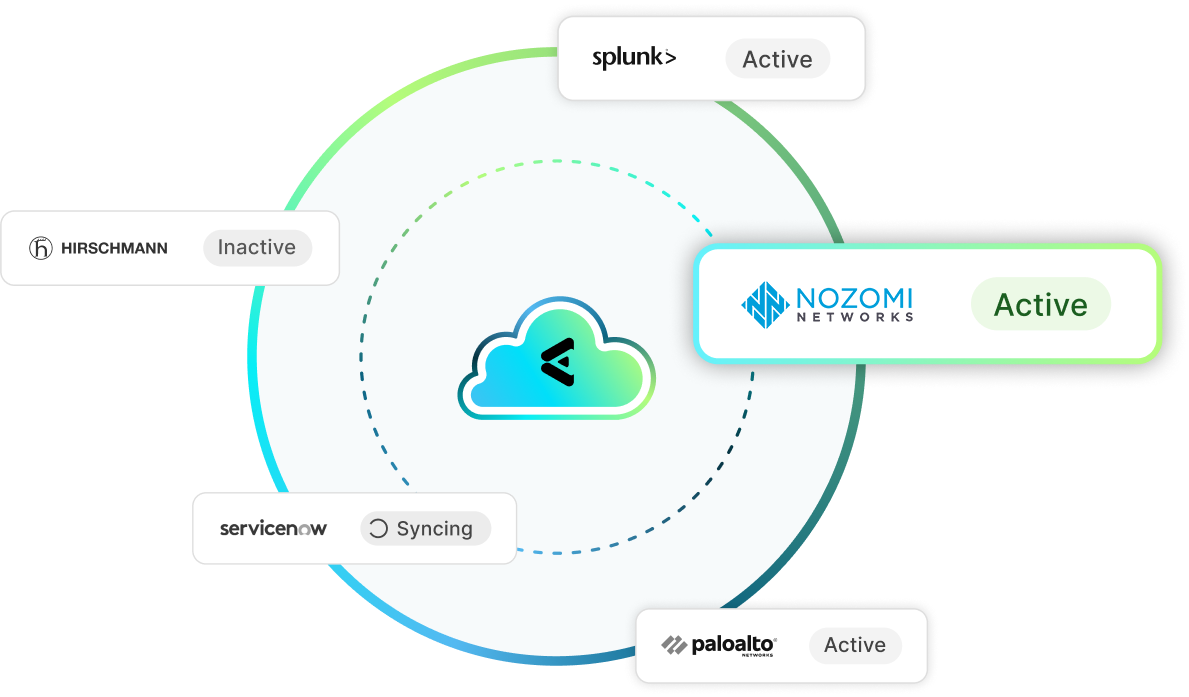
Nozomi Networks monitors your OT network for threats and identifies every connected device. Elisity takes that intelligence and enforces identity-based microsegmentation through your existing switches. Together, you get threat-aware segmentation policies built on real device context, not spreadsheets and guesswork.
-
Integration Demo
Download Integration BriefStronger Identity, Smarter Policies: Nozomi Networks Integrated with Elisity
See how Nozomi’s threat detection and device profiling data flows into Elisity IdentityGraph, giving your security team the context to write microsegmentation policies they can defend to auditors and plant managers alike.
Support Documentation
Learn more about the integration details.
Connect Nozomi
Step-by-step guide to connecting Nozomi Networks with Elisity IdentityGraph for OT/IoT microsegmentation.
Nozomi Networks Classification Details
View Nozomi Networks device classification attributes, data fields, and enrichment details.
Challenge
OT/IoT Asset Visibility and Threat Detection with Nozomi Networks
Your OT security platform detects a Modbus device behaving anomalously on a production subnet. What is it? A PLC, an HMI, a sensor? What firmware is it running? Who configured it, and when? Without those answers, your team can see the threat but can’t scope the blast radius or write a containment policy. That’s the gap in most OT environments: threat detection tools surface alerts, but the device context needed to act on them lives in a different system, or doesn’t exist at all. Explore OT segmentation strategies to close that gap.
Elisity Solution
Nozomi Networks Device Intelligence Enriches Elisity IdentityGraph
Nozomi Guardian and Nozomi Vantage passively monitor your network traffic using deep packet inspection across 100+ OT and IoT protocols, from Modbus and BACnet to EtherNet/IP and OPC UA. Every device gets profiled: type, manufacturer, model, operating system, firmware version. That device intelligence flows directly into Elisity IdentityGraph through a simple API connection, where it becomes the foundation for microsegmentation policies. Your team doesn’t have to manually correlate data across platforms. Nozomi identifies what’s on your network and what it’s doing. Elisity uses that context to control what each device is allowed to reach.
Challenge
Protecting Legacy OT Devices That Cannot Run Endpoint Agents
A Siemens S7-300 PLC installed in 2009 doesn’t accept endpoint agents. Neither does the Allen-Bradley ControlLogix running your packaging line, or the BACnet controller managing HVAC across three buildings. These devices weren’t designed for security. They were designed to run for 20 years without interruption, and that’s exactly what they’re doing. You can’t patch them. You can’t install software on them. And Nozomi’s behavioral monitoring tells you they’re talking to devices and subnets they have no business reaching.
Elisity Solution
Agentless Microsegmentation Enforcement via Existing Infrastructure
Elisity enforces least-privilege policies at the network edge, through your existing switches, without touching the devices themselves. When Nozomi’s device profiling identifies that S7-300 as a legacy PLC running firmware from 2012, Elisity IdentityGraph classifies it into the appropriate policy group and restricts its communication to only the devices and subnets it needs. North-south and east-west. If that PLC starts reaching outside its normal traffic pattern (something Nozomi’s behavioral monitoring would flag), your segmentation policy has already limited the blast radius. No agents installed. No hardware added. No production downtime.
Challenge
Complex Network Segmentation Deployment and Extended Time to Value
You’ve invested in Nozomi to monitor threats and profile devices across your OT environment. But if it takes 18 months and a forklift network upgrade to act on what Nozomi finds, you’re paying for visibility without enforcement. IEC 62443 requires zone and conduit segmentation. Your auditor doesn’t care that you can see the devices if you can’t prove you’re controlling traffic between zones.
Elisity Solution
Deploy Nozomi-Powered Microsegmentation in Weeks, Not Years
Connect Nozomi to Elisity IdentityGraph by entering your API credentials in the Elisity Cloud Control Center. It takes minutes. Once connected, every device Nozomi has profiled starts enriching your IdentityGraph immediately: device type, manufacturer, model, OS, firmware version. From there, you build policy groups based on real device attributes instead of IP ranges or VLAN assignments. Most teams go from API connection to enforced microsegmentation policies in weeks, not the 18 months a traditional VLAN redesign would take. Your existing switches do the enforcement. No new hardware. No network redesign. And every device Nozomi discovers going forward automatically flows into your policy framework.
Webinar On Demand
Customer Spotlight: How GSK Secured Pharmaceutical Manufacturing Without Disrupting Production
Explore Our Integrations
Elisity integrates with leading IT, OT, and IoT asset intelligence platforms. Combine deep device discovery and classification with identity-based microsegmentation enforced through your existing network infrastructure.
Device Intelligence / Risk Status
EDR / Risk Status
CMDB
Network Enforcement Point
User Identity / Device Metadata
SIEM
Nozomi Networks + Elisity Integration FAQ
Get answers to common questions about how Nozomi Networks integrates with Elisity to deliver OT/IoT visibility and identity-based microsegmentation for industrial environments.
Nozomi Networks Guardian and Vantage discover, classify, and profile every OT and IoT device in your environment using passive network monitoring and deep packet inspection. You connect Nozomi to Elisity by entering API credentials in the Elisity Cloud Control Center, which takes minutes. Once connected, Nozomi's device intelligence (device type, manufacturer, model, OS, firmware version) flows directly into Elisity's IdentityGraph™, where it's used to build identity-based microsegmentation policies. Elisity then enforces those policies through your existing network switches, so you get Zero Trust protection without adding new hardware or installing endpoint agents.
No. You don't need to install anything on your OT devices. Nozomi uses passive network monitoring to discover and classify devices without touching endpoints, and Elisity enforces segmentation policies through your existing switches. This fully agentless architecture matters in OT environments because most industrial devices can't support software agents: they run legacy operating systems, carry vendor restrictions, hold safety certifications that prohibit modifications, or perform operations too sensitive for additional software. With Nozomi and Elisity, you get full visibility and microsegmentation enforcement without ever touching a production endpoint.
Nozomi covers the full range of industrial and IoT devices: programmable logic controllers (PLCs), remote terminal units (RTUs), distributed control systems (DCS), SCADA systems, building management systems, and thousands of IoT device types. Nozomi supports over 100 OT and IoT protocols, including Modbus, BACnet, DNP3, EtherNet/IP, PROFINET, and OPC UA. All of that device context, including protocol-specific attributes, flows into Elisity's IdentityGraph™, so your segmentation policies reflect what each device actually is and how it communicates, not just its IP address.
Nozomi and Elisity map directly to IEC 62443's zone and conduit network segmentation requirements. Nozomi classifies your devices into functional groups based on their role and risk profile. Elisity takes those classifications and builds policy groups with least-privilege access controls, so each zone only permits the traffic it's supposed to. Instead of manually defining zones in spreadsheets and hoping your VLANs match, you get automated policy creation that stays current as devices join or move across your network. This same approach supports NIST CSF, NERC CIP, and other industrial compliance frameworks.
The API connection between Nozomi and Elisity takes minutes to set up: you enter Nozomi's API credentials in the Elisity Cloud Control Center, and device data starts enriching IdentityGraph™ immediately. From there, most organizations achieve full microsegmentation deployment in weeks, not the months or years that traditional network segmentation projects typically require. Elisity uses Nozomi's device classifications to automatically build policy groups, which eliminates the manual device inventory, network redesign, and VLAN reconfiguration that slow down legacy approaches.
Resources

Leading Vendors for Securing OT and Industrial Control Systems in 2026

AI Agents in OT Security: What S4x26 Revealed for 2026